Have you ever used the word “they” many times in your writing? Using the same word again and again can make your sentences sound boring. Learning alternatives can help you write in a clear and natural way. The word they is a pronoun used to talk about two or more people, animals, or things. It can also refer to one person when their gender is unknown or when they use they/them pronouns. For example, instead of saying “They are my classmates,” you can say “My classmates are here.” Learning synonyms for them can help students, bloggers, content writers, and daily English users improve their vocabulary. In this guide, you will find 25 alternatives to them with simple meanings and easy examples.
Quick Answer: What Are the Synonyms for They?
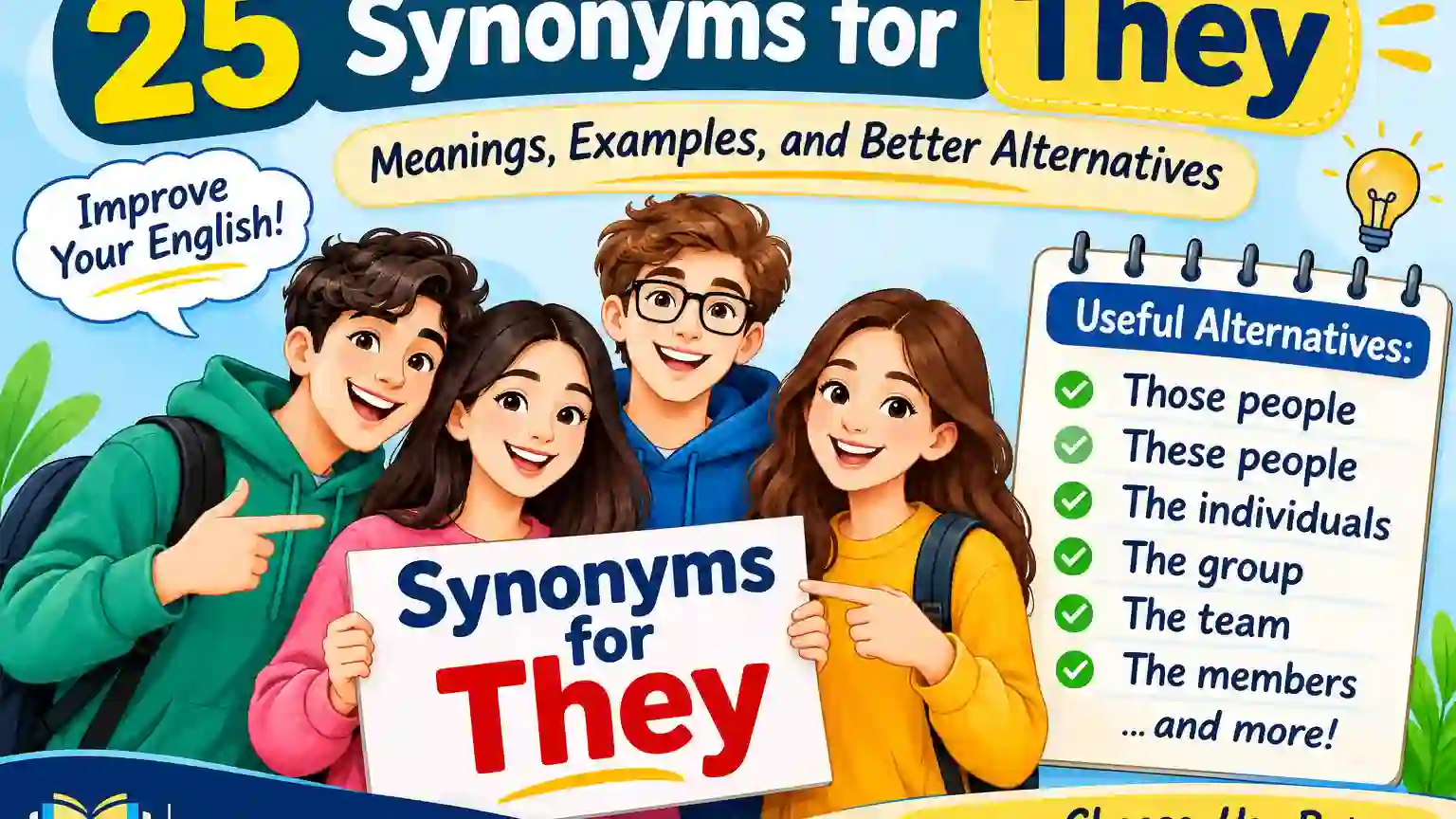
Some useful alternatives to they include:
Those people, these people, the individuals, the group, the team, the members, the participants, the students, the workers, the employees, the customers, the guests, the children, the readers, the users, the applicants, the candidates, the players, the audience, the public, the family, the neighbors, the friends, the volunteers, and the witnesses.
Important: These are context-based alternatives, not exact replacements in every sentence. Choose the expression that matches the people or things you are talking about.
Table of 25 Alternatives for They
| No. | Alternative | Part of Speech |
| 1 | Those people | Noun phrase |
| 2 | These people | Noun phrase |
| 3 | The individuals | Noun phrase |
| 4 | The group | Noun phrase |
| 5 | The team | Noun phrase |
| 6 | The members | Noun phrase |
| 7 | The participants | Noun phrase |
| 8 | The students | Noun phrase |
| 9 | The workers | Noun phrase |
| 10 | The employees | Noun phrase |
| 11 | The customers | Noun phrase |
| 12 | The guests | Noun phrase |
| 13 | The children | Noun phrase |
| 14 | The readers | Noun phrase |
| 15 | The users | Noun phrase |
| 16 | The applicants | Noun phrase |
| 17 | The candidates | Noun phrase |
| 18 | The players | Noun phrase |
| 19 | The audience | Noun phrase |
| 20 | The public | Noun phrase |
| 21 | The family | Noun phrase |
| 22 | The neighbors | Noun phrase |
| 23 | The friends | Noun phrase |
| 24 | The volunteers | Noun phrase |
| 25 | The witnesses | Noun phrase |
1. Those People
Meaning: A phrase used to talk about people who are not close to the speaker.
Examples:
- Those people live across the street.
- Those people helped us yesterday.
2. These People
Meaning: A phrase used to talk about people who are near or being discussed.
Examples:
- These people are very kind.
- These people work hard every day.
3. The Individuals
Meaning: A phrase used to talk about separate people.
Examples:
- The individuals completed the task on time.
- The individuals shared their ideas.
4. The Group
Meaning: A phrase used for several people who are together.
Examples:
- The group is ready for the trip.
- The group works well together.
5. The Team
Meaning: A phrase used for people who work or play together.
Examples:
- The team won the final match.
- The team is preparing for the next game.
6. The Members
Meaning: A phrase used for people who belong to a group or organization.
Examples:
- The members attended the meeting.
- The members shared their opinions.
7. The Participants
Meaning: A phrase used for people who take part in an activity.
Examples:
- The participants joined the competition.
- The participants received certificates.
8. The Students
Meaning: A phrase used for people who study at a school, college, or university.
Examples:
- The students finished their homework.
- The students are preparing for their exams.
9. The Workers
Meaning: A phrase used for people who do a job.
Examples:
- The workers arrived early.
- The workers completed the project.
10. The Employees
Meaning: A phrase used for people who work for a company or organization.
Examples:
- The employees attended the training.
- The employees received their salaries.
11. The Customers
Meaning: A phrase used for people who buy goods or services.
Examples:
- The customers liked the new products.
- The customers asked for more information.
12. The Guests
Meaning: A phrase used for people who visit a home or an event.
Examples:
- The guests arrived before dinner.
- The guests enjoyed the party.
13. The Children
Meaning: A phrase used for young people who are not adults.
Examples:
- The children played in the garden.
- The children finished their lunch.
14. The Readers
Meaning: A phrase used for people who read books, articles, or other content.
Examples:
- The readers enjoyed the new article.
- The readers shared their feedback.
15. The Users
Meaning: A phrase used for people who use a product, service, or website.
Examples:
- The users found the website helpful.
- The users can change their settings.
16. The Applicants
Meaning: A phrase used for people who apply for a job, course, or position.
Examples:
- The applicants submitted their forms.
- The applicants are waiting for the results.
17. The Candidates
Meaning: A phrase used for people who are trying to get a job or position.
Examples:
- The candidates answered the questions.
- The candidates prepared for the interview.
18. The Players
Meaning: A phrase used for people who take part in a sport or game.
Examples:
- The players practiced in the morning.
- The players celebrated their victory.
19. The Audience
Meaning: A phrase used for people who watch or listen to a show or speech.
Examples:
- The audience enjoyed the performance.
- The audience clapped their hands.
20. The Public
Meaning: A phrase used for people in general.
Examples:
- The public shared its concerns.
- The public deserves clear information.
21. The Family
Meaning: A phrase used for people who are related to one another.
Examples:
- The family planned a holiday.
- The family enjoyed their weekend together.
22. The Neighbors
Meaning: A phrase used for people who live near your home.
Examples:
- The neighbors invited us to dinner.
- The neighbors helped clean the street.
23. The Friends
Meaning: A phrase used for people who know and care about one another.
Examples:
- The friends went shopping together.
- The friends shared their favorite memories.
24. The Volunteers
Meaning: A phrase used for people who offer help without being paid.
Examples:
- The volunteers cleaned the park.
- The volunteers gave their time to help others.
25. The Witnesses
Meaning: A phrase used for people who see an event happen.
Examples:
- The witnesses explained what happened.
- The witnesses gave their statements to the police.
Frequently Asked Questions About Synonyms for They
1. What are the best synonyms for them?
Some useful alternatives include those people, the individuals, the group, the team, and the members. The best choice depends on the sentence.
2. What is another word for they in formal writing?
In formal writing, you can use expressions such as the individuals, the participants, the members, or the employees when they accurately describe the people being discussed.
3. Can I use people instead of they?
Yes, in some sentences. For example, “They need help” can become “People need help.” However, the meaning may become more general.
4. Is they a singular or plural pronoun?
They can be both. It is plural when talking about multiple people or things. It can also be singular when referring to one person whose gender is unknown or who uses they/them pronouns.
5. What is the difference between they and them?
“They” is a subject pronoun, while “them” is an object pronoun.
Example:
- They are my friends.
- I called them yesterday.
6. What is the possessive form of they?
“Their” is the possessive determiner, and “theirs” is the possessive pronoun.
Examples:
- They brought their books.
- The books are theirs.
7. How can I avoid repeating the word they?
You can use names, job titles, group names, or suitable noun phrases. For example, instead of repeating “they,” you can write “the students,” “the team,” or “the workers” when those descriptions are accurate.
Conclusion
Learning alternatives to they can make your writing clearer and more interesting. These expressions help improve your vocabulary, blogging, speaking, and everyday communication. Remember that not every alternative fits every sentence. Choose words that match the people or groups you are describing. Practice using these expressions in emails, essays, articles, and daily conversations. Keep learning and make your English stronger every day!

Habib Ullah is the founder of LanguagePilots, where he creates easy-to-understand English learning content to help students and professionals build confidence in communication.