Have you ever seen someone being treated badly again and again? Maybe a student is repeatedly teased at school, or a worker is constantly bothered by someone at work. These actions can be described as harassment. The word harassment means unwanted behavior that repeatedly bothers, scares, threatens, or troubles another person.
Learning synonyms for harassment helps you describe these situations with greater accuracy. Different words can show different forms of harmful or unwanted behavior. For example, bullying often involves repeated attacks or teasing while intimidation focuses on making someone feel afraid. These words are useful for students writing essays, bloggers creating informative content, content writers explaining social issues, and daily English users. Understanding synonyms for harassment can also help you choose respectful and precise language when discussing difficult situations.
Quick Answer: What Are the Best Synonyms for Harassment?
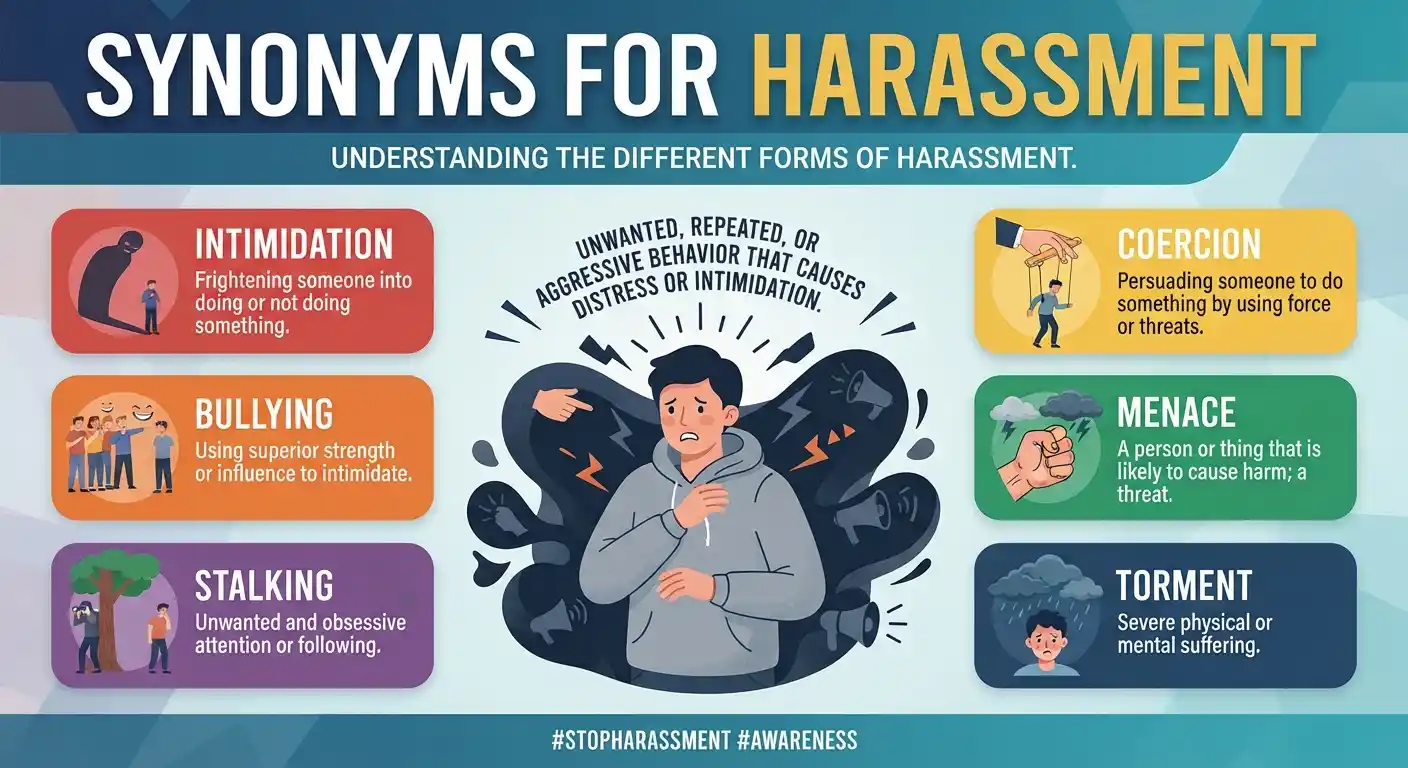
Some common synonyms for harassment include bullying, abuse, intimidation, persecution, mistreatment, victimization, torment, oppression, bullying behavior, annoyance, bothering, pestering, threatening, coercion, and stalking.
Parts of Speech
| Word | Part of Speech | Simple Meaning |
| Harassment | Noun | Repeated unwanted behavior |
| Bullying | Noun | Repeatedly hurting or frightening someone |
| Abuse | Noun | Treating someone badly or cruelly |
| Intimidation | Noun | Making someone feel afraid |
| Persecution | Noun | Treating someone badly over time |
| Mistreatment | Noun | Treating someone unfairly or badly |
| Victimization | Noun | Treating someone as a victim |
| Torment | Noun/Verb | Causing someone great distress |
| Oppression | Noun | Unfair and cruel control |
| Stalking | Noun/Verb | Following or watching someone in an unwanted way |
Main Content – 30 Synonyms for Harassment
1. Bullying
Meaning: Bullying means repeatedly hurting, frightening, or insulting someone.
Examples:
- The teacher spoke to the students about bullying.
- Bullying can make children feel unsafe at school.
2. Abuse
Meaning: Abuse means treating someone badly or cruelly.
Examples:
- The organization has rules against verbal abuse.
- The report described years of emotional abuse.
3. Intimidation
Meaning: Intimidation means trying to make someone feel afraid.
Examples:
- His loud voice felt like intimidation.
- The company does not allow intimidation at work.
4. Persecution
Meaning: Persecution means treating someone very badly for a long period.
Examples:
- The story describes the persecution of a small group.
- The family escaped years of persecution.
5. Mistreatment
Meaning: Mistreatment means treating someone badly or unfairly.
Examples:
- The worker reported mistreatment at the office.
- The shelter has strict rules against animal mistreatment.
6. Victimization
Meaning:
Victimization means treating someone unfairly as if they deserve harm or blame.
Examples:
- The policy aims to prevent victimization.
- She spoke openly about workplace victimization.
7. Torment
Meaning: Torment means causing someone serious mental or emotional pain.
Examples:
- The constant teasing became a source of torment.
- He suffered years of torment from his classmates.
8. Oppression
Meaning: Oppression means using unfair power to control or harm people.
Examples:
- The book tells a story about oppression.
- Many people spoke against political oppression.
9. Annoyance
Meaning: Annoyance means behavior that makes someone feel bothered or irritated.
Examples:
- The repeated calls became an annoyance.
- Loud noise was a daily annoyance for the neighbors.
10. Bothering
Meaning: Bothering means repeatedly disturbing or troubling someone.
Examples:
- She asked him to stop bothering her.
- The constant messages were bothering him.
11. Pestering
Meaning: Pestering means repeatedly asking, calling, or bothering someone.
Examples:
- The children kept pestering their father for a toy.
12. Threatening
Meaning: Threatening means making someone feel that harm may happen.
Examples:
- The employee received a threatening message.
- His threatening words made everyone uncomfortable.
13. Stalking
Meaning: Stalking means repeatedly following or watching someone without wanting to be followed.
Examples:
- She reported the unwanted stalking to the authorities.
- The story focuses on the fear caused by stalking.
14. Coercion
Meaning: Coercion means forcing someone to do something through fear or pressure.
Examples:
- The agreement was made under coercion.
- The law protects people from coercion.
15. Haranguing
Meaning: Haranguing means repeatedly speaking angrily to someone.
Examples:
- The manager kept haranguing the staff.
- His constant haranguing upset the team.
16. Badgering
Meaning: Badgering means repeatedly asking or pressuring someone.
Examples:
- She was tired of his badgering.
- Stop badgering me about the decision.
17. Pestering
Meaning: Pestering means repeatedly bothering someone in an annoying way.
Examples:
- The salesman kept pestering the customer.
- My little brother was pestering me all morning.
18. Troubling
Meaning: Troubling means causing worry, discomfort, or distress.
Examples:
- The messages were troubling.
- The report revealed troubling behavior.
19. Disturbance
Meaning: A disturbance is behavior that interrupts peace or causes trouble.
Examples:
- The repeated calls caused a disturbance.
- The manager dealt with the disturbance quickly.
20. Aggression
Meaning: Aggression means behavior that shows a desire to attack or hurt.
Examples:
- The coach told the players to avoid aggression.
- His aggression made the situation worse.
21. Hostility
Meaning: Hostility means unfriendly or angry behavior toward someone.
Examples:
- She faced hostility from a few coworkers.
- The meeting ended because of growing hostility.
22. Threats
Meaning: Threats are statements that say someone may cause harm.
Examples:
- The police received reports of threats.
- She saved the messages containing threats.
23. Bullying Behavior
Meaning: Bullying behavior is repeated conduct that hurts, frightens, or humiliates someone.
Examples:
- The school has a policy against bullying behavior.
- Parents should talk about bullying behavior with their children.
24. Verbal Abuse
Meaning: Verbal abuse means using cruel, insulting, or harmful words against someone.
Examples:
- The worker reported verbal abuse from a customer.
- Verbal abuse can deeply affect a person’s confidence.
25. Emotional Abuse
Meaning: Emotional abuse means using harmful behavior to hurt someone’s feelings or confidence.
Examples:
- The counselor explained the signs of emotional abuse.
- Emotional abuse can be difficult to notice.
26. Humiliation
Meaning: Humiliation means making someone feel ashamed or embarrassed.
Examples:
- Public humiliation can hurt a person’s confidence.
- He apologized for the humiliation he caused.
27. Ridicule
Meaning: Ridicule means making fun of someone in a cruel way.
Examples:
- The student faced ridicule from other children.
28. Harsh Treatment
Meaning: Harsh treatment means treating someone in a very strict or unkind way.
Examples:
- The report criticized the workers’ harsh treatment.
- The child was upset by the harsh treatment.
29. Unwanted Attention
Meaning: Unwanted attention means attention that a person does not want or welcome.
Examples:
- She asked him to stop giving her unwanted attention.
- The employee felt uncomfortable with the unwanted attention.
30. Oppressive Behavior
Meaning: Oppressive behavior means using unfair power to control or harm another person.
Examples:
- The group spoke against oppressive behavior.
- The new rules were designed to prevent oppressive behavior.
Frequently Asked Questions About Synonyms for Harassment
1. What is the simplest synonym for harassment?
Bothering is a simple everyday word, while bullying is common when someone is repeatedly hurt, threatened, or intimidated.
2. Is bullying a synonym for harassment?
Yes, bullying can be a type of harassment.
However, harassment is a broader term and can happen in many settings.
3. What is a professional synonym for harassment?
Words such as mistreatment, intimidation, victimization, abuse, and unwanted attention can work in professional writing, depending on the situation.
4. What is the difference between harassment and bullying?
Bullying usually involves repeated harmful behavior toward a person, often involving a power difference. Harassment is a broader term for unwanted behavior that troubles, threatens, or targets someone.
5. What is a synonym for workplace harassment?
Depending on the behavior, useful terms include workplace bullying, intimidation, mistreatment, verbal abuse, and unwanted attention.
6. What is the opposite of harassment?
Possible opposites include respect, kindness, support, protection, consideration, and peaceful treatment.
7. Why should I learn synonyms for harassment?
Learning synonyms helps you describe different situations more accurately. It also improves your vocabulary and makes essays, articles, and everyday communication clearer.
Conclusion
Learning synonyms for harassment can improve your writing, blogging, speaking, and communication skills. Words such as bullying, intimidation, mistreatment, and abuse help you explain different types of unwanted behavior clearly.
Students can practice these words in essays, while bloggers and content writers can use them to create accurate and useful content. Try using these terms in emails, essays, and daily conversations. With regular practice, your vocabulary will become stronger and more precise.

Habib Ullah is the founder of LanguagePilots, where he creates easy-to-understand English learning content to help students and professionals build confidence in communication.