Have you ever walked through a quiet place filled with trees, birds, and fresh air? You may have called it the woods. The word woods usually means an area covered with many trees. It is often smaller or less wild than a large forest. For example, a family may enjoy walking through the woods near their home.
Learning synonyms for woods gives you more ways to describe places with trees. Words such as forest, woodland, and grove can make your writing more exact. These words are useful for students writing essays, bloggers creating travel content, content writers describing nature, and daily English users. Understanding synonyms for woods can also help you avoid using the same word many times. With the right synonym, you can clearly describe a small group of trees, a large forest, or a peaceful wooded area.
Quick Answer: What Are the Best Synonyms for Woods?
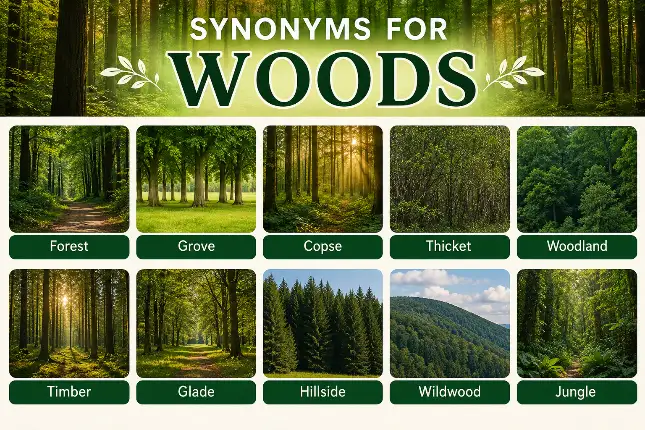
Some common synonyms for woods include forest, woodland, forestland, grove, thicket, copse, bushland, timberland, wilderness, jungle, tree stand, wooded area, and woodlot.
Parts of Speech
| Word | Part of Speech | Simple Meaning |
| Woods | Noun | An area with many trees |
| Forest | Noun | A large area covered with trees |
| Woodland | Noun | Land with many trees |
| Grove | Noun | A small group of trees |
| Copse | Noun | A small group of trees |
| Thicket | Noun | A dense group of bushes and trees |
| Timberland | Noun | Land where trees grow for timber |
| Wilderness | Noun | A wild natural area |
| Jungle | Noun | A thick, wild area with plants and trees |
| Woodlot | Noun | A small area of trees |
Main Content – 30 Synonyms for Woods
1. Forest
Meaning: A forest is a large area covered with many trees and plants.
Examples:
- We walked through the forest after breakfast.
- Many wild animals live in the forest.
2. Woodland
Meaning: Woodland is land that has many trees growing on it.
Examples:
- The house is surrounded by beautiful woodland.
- We explored the woodland on Sunday.
3. Forestland
Meaning: Forestland is land that is covered with or used for growing trees.
Examples:
- The government protects large areas of forestland.
- Birds live throughout the forestland.
4. Grove
Meaning: A grove is a small group of trees growing together.
Examples:
- We rested under a quiet olive grove.
- The children played near the tree grove.
5. Copse
Meaning: A copse is a small group of trees.
Examples:
- A small copse stood behind the farm.
- We found a shady spot inside the copse.
6. Thicket
Meaning: A thicket is a thick group of bushes and small trees.
Examples:
- The rabbit disappeared into the thicket.
- We could barely walk through the thick thicket.
7. Timberland
Meaning: Timberland is land where many trees grow for wood.
Examples:
- The company owns thousands of acres of timberland.
- Workers planted new trees across the timberland.
8. Wilderness
Meaning: Wilderness is a natural area where people have changed very little.
Examples:
- They spent three days exploring the wilderness.
- The wilderness was quiet and beautiful.
9. Jungle
Meaning: A jungle is a thick, wild area filled with trees and plants.
Examples:
- Monkeys moved through the jungle trees.
- We watched a nature show about the jungle.
10. Bushland
Meaning: Bushland is an area covered with bushes, trees, and wild plants.
Examples:
- Kangaroos moved through the bushland.
- The hikers crossed a large area of bushland.
11. Tree Stand
Meaning: A tree stand is a group of trees growing close together.
Examples:
- A tall tree stand covered the hillside.
- Birds gathered in the tree stand.
12. Wooded Area
Meaning: A wooded area is a place covered with many trees.
Examples:
- The park has a large wooded area.
- We found a path through the wooded area.
13. Woodlot
Meaning: A woodlot is a small piece of land covered with trees.
Examples:
- The farmer planted trees in his woodlot.
- We walked around the small woodlot.
14. Plantation
Meaning: A plantation is a large area where trees or crops are grown.
Examples:
- The workers cared for the tree plantation.
- We passed a large pine plantation.
15. Brushland
Meaning: Brushland is land covered mainly with bushes and small plants.
Examples:
- The deer moved quietly through the brushland.
- The path ended near a patch of brushland.
16. Scrubland
Meaning: Scrubland is land covered with low bushes and small trees.
Examples:
- The birds built nests in the scrubland.
- The road passed through dry scrubland.
17. Grove
Meaning: A grove is a pleasant small area where trees grow together.
Examples:
- We had lunch beneath a peaceful grove.
- The garden has a beautiful citrus grove.
18. Copsewood
Meaning: Copsewood refers to a small wooded area or group of trees.
Examples:
- A quiet copsewood stood near the river.
- The path led into the copsewood.
19. Canopy
Meaning: A canopy is the layer formed by the tops of trees.
Examples:
- Sunlight came through the forest canopy.
- Birds flew above the green canopy.
20. Bush
Meaning: Bush can describe wild land covered with trees, bushes, and plants.
Examples:
- We walked through the bush in the morning.
- The animal disappeared into the bush.
21. Wildwood
Meaning: Wildwood means a natural wooded area that is not heavily changed by people.
Examples:
- The story takes place in a magical wildwood.
- We explored the wildwood near the village.
22. Backwoods
Meaning: Backwoods means a remote area with few people and many natural spaces.
Examples:
- He grew up in the backwoods.
- They traveled deep into the backwoods.
23. Evergreen Forest
Meaning: An evergreen forest is a wooded area with trees that stay green all year.
Examples:
- Bears live in the evergreen forest.
- The evergreen forest looked beautiful in winter.
24. Rainforest
Meaning: A rainforest is a hot, wet forest with many plants and animals.
Examples:
- The rainforest receives heavy rain each year.
- Scientists study rare animals in the rainforest.
25. Pine Forest
Meaning: A pine forest is an area where many pine trees grow.
Examples:
- We camped beside a peaceful pine forest.
- The pine forest smelled fresh after the rain.
26. Grove of Trees
Meaning: A grove of trees is a small group of trees growing together.
Examples:
- We sat beneath a grove of trees.
- A grove of trees stood near the lake.
27. Tree-Covered Land
Meaning: Tree-covered land is an area where many trees grow.
Examples:
- The map shows a large area of tree-covered land.
- The hikers crossed the tree-covered land.
28. Forested Area
Meaning: A forested area is a place that has many trees.
Examples:
- The village is surrounded by a forested area.
- We drove through a beautiful forested area.
29. Wooded Country
Meaning: Wooded country is a region that contains many trees and wooded places.
Examples:
- They traveled through wooded countries.
- The farm sits in quiet wooded country.
30. Natural Woodland
Meaning: Natural woodland is a wooded area that grows with little human change.
Examples:
- The park protects its natural woodland.
- Many animals depend on the natural woodland.
Frequently Asked Questions About Synonyms for Woods
1. What is the easiest synonym for woods?
Forest is one of the most common synonyms for woods. However, forest often suggests a larger area.
2. Is woodland the same as woods?
Yes, woodland and woods are very similar. Both describe areas where many trees grow.
3. What is the difference between woods and forest?
A forest usually refers to a larger area with many trees, while woods often describes a smaller wooded area.
4. What is a small group of trees called?
A grove or copse can describe a small group of trees growing together.
5. Is jungle a synonym for woods?
Jungle can sometimes describe a wooded area, but it usually means a thick, tropical, and wild place with dense plants.
6. What is a formal word for woods?
Woodland, forestland, and forested area can work well in formal writing, depending on the context.
7. Why should I learn synonyms for woods?
Learning synonyms helps you describe nature more clearly. It also makes essays, stories, blogs, and everyday English more varied and interesting.
Conclusion
Learning synonyms for woods can improve your writing, blogging, speaking, and communication. Words like forest, woodland, grove, copse, and thicket help you describe different types of wooded places.
Students can use these words in essays, while bloggers and content writers can create richer descriptions of nature and travel. Practice these synonyms in emails, essays, stories, and daily conversations. The more you use them, the easier and more natural your English will become.

Habib Ullah is the founder of LanguagePilots, where he creates easy-to-understand English learning content to help students and professionals build confidence in communication.